Hats off to the Rhinestone Cowboy
© 2016 The Domestic Alien
We were introduced by my dad, whose all-encompassing taste in music had a special place for country and western. He called it ‘Mountain William music’—hillbilly music—and the genre wasn’t a favourite of mine at the time. But this album was different.
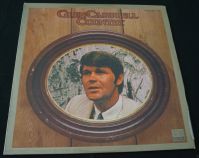 Glen Campbell Country ushered in a new era for me. There he was on the cover, a young man wearing a Colonel Sanders tie and the plaintive expression I would come to recognise as artistic angst. I was instantly smitten.
The album notes told a song-like story of a southern boy—the seventh son of a seventh son—who’d begun playing guitar at four, had been on radio since six and had left home, guitar in hand, at 14 to make a life in music. By the time Glen Campbell Country was released he’d done that spectacularly and, with the Grammys and movies and TV shows piling up, it seemed the hard yards were mostly behind him.
Country music wasn’t so cool when I was growing up—this was the time of glam rock and innovators like Pink Floyd and Led Zeppelin—so I copped some teasing over my devotion to the straight-looking, short-haired and somewhat older Mr Campbell.
And there was a further complication: a boy in my class shared the famous name, so when the other girls were writing ‘I love David Cassidy/Donny Osmond/Michael Jackson’ etc in their books, I had to specify ‘I love Glen Campbell (singer)’. You wouldn’t believe how many times that last word got rubbed out while I was away from my desk.
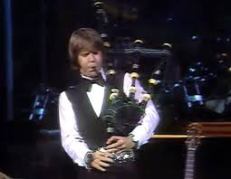 Then came the great announcement—an Australian concert tour had been scheduled. I nagged my parents about it for weeks and, once they’d agreed to the not insignificant outlay, the precious tickets sat in a living room cabinet so I could savour the anticipation while awaiting the big night. Finally the time came, and what a show it was—all of my old favourites and some that became new favourites. And just when I thought things couldn’t get any better, he gave a reverent nod to his Scots heritage by enthralling the stadium with the bagpipes. Always partial to the baggies (I never understood the jokes about how terrible they sound), I loved them even more after that. I thought all of my Christmases had come at once.
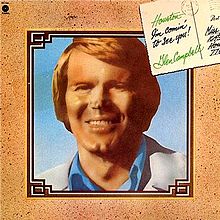
But it’s a single Christmas that stands out in my memory, when an aunt gave me my first Glen Campbell LP—Houston-I’m comin’ to see you!—which featured the bagpipe-laced Bonaparte’s Retreat, an old Pee Wee King song drawn from a traditional Scottish ballad. It’s still my favourite LP, and Bonaparte’s is still my favourite Glen Campbell song.
 In the mid-1970s he had some crossover hits like Rhinestone Cowboy and Southern Nights, and suddenly Glen Campbell was cool with a wider audience than ever before. The Rhinestone Cowboy filmclip even aired on Countdown, Australia’s television music bible of the day, and I’m convinced my weakness for broad-shouldered men began with that clip. But that’s another story.
More recently we’ve heard of Glen Campbell’s battle with Alzheimer’s Disease, that merciless health and dignity thief that snuck in on the coat-tails of human longevity. It’s been a grim odyssey, but one he and his family have used to destigmatise and raise awareness of the cruel disease through the poignant swansong I’m not gonna miss you.
The voice and strings may be silent now, but throughout his long and distinguished career Glen Campbell has touched the lives of countless fans, colleagues and proteges—including banjo prodigy Carl Jackson and our very own Keith Urban.
It’s said the Scots believe that the seventh son of a seventh son is born lucky, and maybe that’s true. But I think this seventh son of a seventh son from Arkansas was innately talented and crafted his own luck, turning his life into something even more magical than any of the many, many songs he’s given us in his time.
Hats off to the Rhinestone Cowboy!


1 February 2016 © 2015 The Domestic Alien
_____________________________________________________
As off the wall as Humpty himself
© 2015 The Domestic Alien
Of all of the nursery rhymes, I loved Humpty Dumpty best … not least because he also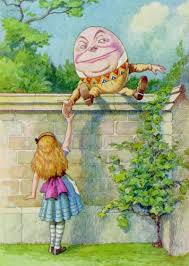 cameoed in Alice’s Adventures in Wonderland, which is still my favourite story. His turning up amongst my other favourite characters gave me a wonderful sense of completeness.
My love of Humpty’s own story showed an early appreciation of poignancy, as epitomised by the trauma I suffered on being given a copy of Goldilocks and the Three Bears that depicted Baby Bear in tears over his broken chair. But somehow the tale of Humpty’s demise, though tragic, filled me with an inexplicable positivity; a sense of something good amongst the wreckage and mess. I’m sure the psychs and scholars—and perhaps the clerics, as well—could go to town on that one. But I just see it as a lifelong affinity with H. Dumpty that has stood the test of time.
Once when I was a little girl, my dad took the most unusual step of saying he’d take me on one of his country runs. A Ford man through and through, he was a crack vehicle salesman at that time, with a large client base around the Great Southern. And this trip was to go to the very outer reaches of his territory. ‘We’ll see the man about the car,’ he told me, ‘then we’ll go and have lunch with someone very special.’
‘Who is it?’ I asked, but he just smiled and told me it was a surprise. I always loved his surprises.
The day dawned, and I was resplendent in my pink dress, long white socks and red patent leather Mary Janes. My mother had packed us a delectable picnic but, wonderful as that was, my thoughts were only for our mystery lunch companion. Who could it be?
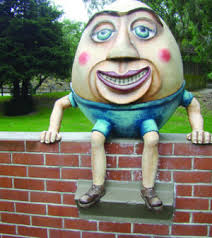 It’s amazing how the anticipation of something wonderful can get us smilingly through the most mundane—or, in extreme cases, excruciating—hours, as it did for me that day. Then, at long last, it was time.
Deal done, my jubilant dad drove into the small town we were near, stopping at a park. And in that park sat Humpty, happily intact on his wall. It was one of the most memorable lunches I’ve ever known—just me, my dad and Humpty, and the picnic my mother had so lovingly prepared. I only wish I had a photograph of the occasion, though the image that’s in my mind is pretty good.
That I still remember that day so vividly after all these years speaks volumes of my relationship with Humpty. I can’t remember the name of the town—perhaps it was Dumbleyung, perhaps Pingrup—maybe a reader will be able to help me there. But I do remember Humpty.
Perhaps on my mind more than I’ve realised, he’s made cameos in my own writing from time to time—not consciously, you understand. He just seems to turn up every now and again. So I’ll leave you with two of the pieces he’s starred in. The first is a tongue-in-cheek take on applying today’s political correctness and precautionary legal safeguards to the nursery rhyme, while the second was an assignment piece that charged me with re-telling the story in my own way.
Hope you won’t find them too off the wall!
The politically correct Humpty Dumpty
Mr, Ms or Mx tofu ball voluntarily positioned themself atop a humankind-constructed masonry structure.
Through general or specific causes that remain unclear, Mr, Ms or Mx Tofu Ball experienced spontaneous extrication from said humankind-constructed masonry structure. An extensive review into said spontaneous extrication is currently underway, with lines of inquiry including, but not being limited to: inattention, third party intervention, inclement prevailing climatic conditions, bad karma, or Mr, Ms or Mx Tofu Ball’s own negligence. Should said negligence be found to be the result of Mr, Ms or Mx Tofu Ball’s having imbibed an excessive quantity of an intoxicating beverage, then liability for said spontaneous extrication may be transferred to purveyors, merchants and/or producers of such beverages. This includes, but is not limited to, grape growers.
The full complement of the recognised democratically-appointed head of state’s equine and human forces has thus far been unsuccessful in seeking to restore Mr, Ms or Mx Tofu Ball to their former state of intactness. In no way does this suggest or imply that said equine and human forces are negligent or derelict in their duties, or that any or all of said forces are not suitably qualified and experienced to hold the positions for which they are employed.
The true story of H. Dumpty
In the moist twilight—the air a heavy, purple spectre of a day now spent, Humpty sat on his wall. It was the demarcation of the end of his kingdom and the gateway to the rest of the wide, wonderful world.
The sky was a tapestry of light and shade pierced with brilliant stars, and the land beyond his wall lay quietly, alluring in its dusky quilt. He felt wanderlust stirring somewhere in his soul, and squirmed inside his shell like an adolescent still growing into his own body.
The clerics called the dark ‘the great silence’ and drew from it a deep serenity that reaffirmed their faith. Seeking enlightenment, Humpty had decided to keep watch over his edge of the world once—just once—throughout the great silence.
 What a vigil it was. He saw unnamed colours and the shape of beauty. He smelled the sweetness of hope, and thought he heard the whisper of forever.
Towards the dawn he began to grow weary. Then he saw a radiant, tailed star dancing before him and, aching to know the feeling of brilliance, he stretched and leaned forward just a little to reach it, and …
Down he fell—past shock, denial, negotiation, anger, depression, acceptance and, finally, peace.
Faith, his new companion, smiled warmly at him … and Humpty smiled back.
8 March 2015 © 2015 The Domestic Alien
_____________________________________________________
Legends are as legends do
© 2014 The Domestic Alien
Legends come in all shapes and sizes, but for mine, the greatest legends are those smart and talented people who have no idea just how smart and talented they are.
There are loads of wonderful examples, but with oral (and aural) history being what it is, some anecdotes morph somewhat in the telling. While I’m loath to let the truth get in the way of a good story, I’m generally a stickler for thorough research and fact-checking. But I’ve made an exception for this piece because some of the stories sounded great just as I heard them. So to cover myself, I’ve used that all-purpose get-out-of-jail-free card—‘legend has it’. Except for the one about Li Cunxin, whom I spoke to myself. Does that make me a legend by association?
Okay—here we go.
Legend has it that Mental as Anything, the Australian band famous for songs like Live it Up and for providing the soundtrack to the cult film 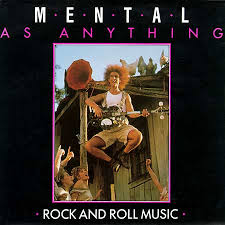 Young Einstein, was formed while the members were studying fine arts at university. Students being what students are, and students’ income being what it is, they decided to form a band, figuring that if they played in pubs, they’d be given free beer. But The Mentals, as they’re affectionately known, became so popular that it was years before any of them had time to spend practising their fine art. But now they do, and if ever they feel like partaking of free beer, they can always hit the pubs and clubs again. The audience is waiting.
Legend has it that Harrison Ford’s gift for acting is matched by a gift for carpentry, which carried him through the lean times between acting gigs. While working on cabinets in George Lucas’s office, he was asked to perform Han Solo’s script lines to assist an acting hopeful’s audition for a role in Star Wars. Disgruntled they’d do this when they hadn’t offered him an audition of his own, Ford instantly conjured up the flawed brilliance of the character none of us could now imagine anyone else playing.
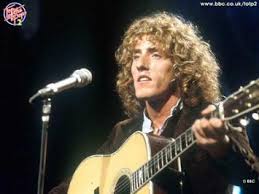 Legend has it that Roger Daltrey, long renowned as one of rock’s most charismatic frontmen, only switched to vocals when one Colin Dawson left The Detours, a precursor of The Who. An accomplished guitarist, Daltrey then left those duties solely to the consummate Pete Townshend, while he stepped into centre stage. To the rest of the world this is his natural milieu, and many are unaware of his formidable talents as an axeman. He may be fair-haired, but he’s a dark horse.
Legend has it that Matchbox Twenty’s Rob Thomas—the gifted songwriter and vocalist whose musical and lyrical artistry has won Grammys and screen music awards—got started because ‘I’ve always wanted to tell stories, but I never had the patience to sit down at a typewriter and write short stories or anything like that. I started writing songs as a way of communicating ideas the best way I could.’ As you do … and in his case, far better than most.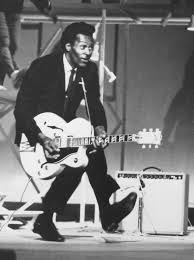
Legend has it that Chuck Berry—that messiah of rock’n’roll—could turn a deft hand to almost anything, including photography. While working as a freelance photographer he took on some musical gigs so he could earn the money to buy more photographic equipment. But in the ensuing years he’s spent far more time in front of the camera than behind it.
Legend has it that Bon Scott, the late frontman of AC/DC, wasn’t always a singer. ‘I started out as a drummer,’ he once told Scream magazine, ‘but I switched to vocals because the singers got more chicks.’ And aren’t we glad he did?
Legend has it that Johnny Depp, an accomplished and experienced guitarist, moved to Los Angeles with his band The Kids to chase a record deal. With modest but acclaimed success with another group, Rock City Angels, under his belt, JD was introduced to Nicolas Cage, who suggested he should try acting. And he did … but a muso’s always a muso, even when they’re doing something else, and doing it very well. So JD still wields his axe with great aplomb, collaborating with, among others, rock mainstays like Aerosmith and Oasis. What a life!
 Legend has it that Canadian rocker Bryan Adams ‘originally wanted to be the guitarist in a band. My friends and I would practise in the basement, hoping one day to find someone that could sing and front the band … we never did. [So] I became a singer.’ And later, an award-winning songwriter who claims to ‘only write music for myself, I don’t try and appeal to anyone else.’ Then he decided to have a go at writing songs for films, and Robin Hood: Prince of Thieves’s Everything I Do I Do it For You, and All For Love from The Three Musketeers became two of the highest-selling film songs of all time. Always scouting for something new, Adams then took his long-standing passion for photography to a new level by exhibiting his works—including the acclaimed Faces of War collection—and releasing his images in book form. And it was he who took the photograph of Her Majesty the Queen that appeared on the commemorative British postage stamp. Damn, he’s good.
Legend has it that Elvis Presley used his truck-driving earnings to record It’s Alright Mama as a birthday gift for his mother Gladys, and someone heard it …
And having conquered the world stage, Li Cunxin, now Artistic Director of Queensland Ballet in Australia but best known around the world as Mao’s Last Dancer, took to the take-no-prisoners realm of commercial stockbroking. ‘Dancing was all I knew,’ he told me, ‘but I realised that financially [as a ballet dancer] I was never going to be able to support my children and realise my childhood dream to help my family in China.’ That decision saw Li putting in gruelling working days combining professional ballet commitments with studying finance at the Australian Securities Inst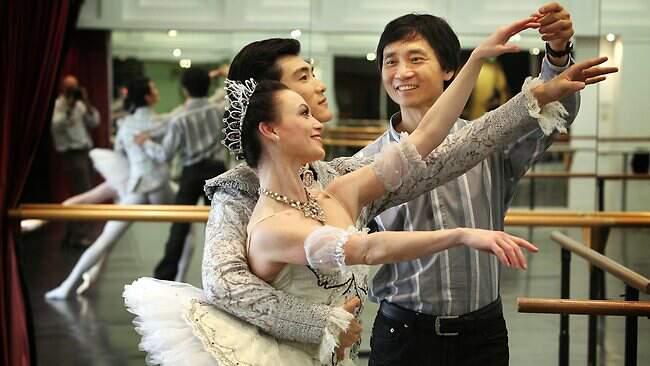 itute, before switching to full-time stockbroking in 1999. ‘Stockbroking allowed me to provide for my children, buy an apartment for my parents in China, help my brothers start their own businesses and sponsor some of my nieces to study in Australia,’ he said. ‘So I’ve really achieved what I set out to achieve.’ And legend doesn’t have to have this last one, because I spoke to Li myself … remember?
So there you have it—a modern history of a few legends who’ve fulfilled their talents in unexpected ways—often seemingly through providence, but perhaps in truth it was more than that. Maybe it just comes down to having a go. Like Thomas Edison said: ‘Success is 10 per cent inspiration and 90 per cent perspiration.’
And that man was a legend.
31 August 2014 © 2014 The Domestic Alien
Left of centre
© 2014 The Domestic Alien
As one of only two left-handers in a large extended family, I was always a little different. Well, left-handedness wasn’t the only thing that set me apart, but it was the only one of my differences I never tried to hide or change. I liked it. But not for practical reasons, because there weren’t any.
My mother would speculate that she’d ‘caused’ my left-handedness by passing things to me with her right hand, working on the assumption I’d simply reached for whatever it was with my nearest hand. But if that were true, every second generation would be left-handed. And besides, our dominant hand naturally becomes our default, even when we have to cross ourselves or adopt weird and wonderful ways of doing things. Any doubts you might have about that would soon be dispelled by watching me use a right-handed can opener—a spectacle that has kept my parents, and more recently Mr Alien and the Alienettes, entertained for years.
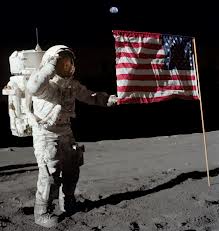 With the French term for ‘left’—gauche—also being the English word for ‘awkward’, and the French for ‘right’—droit—being the basis of ‘adroit’, the English word for ‘skilled’, these prejudices (prejudi?) are even firmly embedded in language. On noticing my left-handedness, an elderly man once told my father that the term ‘sinister’ had been coined for lefties, who weren’t to be trusted (I’ve since heard this was because a left-hander could still wield a deft dagger while shaking your hand). But my dad countered that one beautifully by telling the man that the first man on the moon was left-handed, and if left-handers were good enough for NASA, then they were good enough for my dad, too.
By the time I went to school they’d dispensed with trying to force lefties to change, but swimming against the tide is never easy, and a left-hander’s life in a predominantly right-handed world was certainly interesting. The round-dial telephones of the day were fun to use, as were microscopes, cameras and most electrical appliances, whose adjustment buttons were always on the right-hand side. The one saving grace was that I could use my good hand to change gears when I learned to drive … but only after I’d swung my right foot out of the car to turn the key with my left hand—it was way too tricky to be wiggling into the sweet spot with my right hand.
When I met Mr Alien, I was delighted to learn he too was a lefty. But even with two left-handed parents, not one of the Alienettes has inherited this wonderful, if quirky, trait—they’re all wonderful, and definitely quirky, but none is left-handed—although one appears to be left-footed. And if you’ll pardon the pun, here’s the kicker—they all use cutlery the left-handed way, though we taught them to do it right-handed, as we ourselves had been taught by our right-handed parents. So it can’t be a genetic characteristic, or a learned one.

Left-handedness has been attributed to many things—a sign of the devil (the view reputedly espoused by Jimi Hendrix’s father and possibly my own, when I was having a bad day); an accident at birth; or exposure to extra testosterone while in the womb. The latter has also been offered as the reason twice as many men as women are left-handed, and why left-handed women often succeed in male-dominated fields (notable examples being Joan of Arc, Queen Victoria, Marie Curie and Oprah Winfrey).
The list of typical left-handed traits is impressive, and includes:
- Experimental
One needs to be. The general populace isn’t about to change for the 10 per cent of us who are lefties, so we need to find our own solutions. Hence the advent of the left-handed can opener and screw-top jars.
- Hot tempered
You’d be hot-tempered too, if you had as much trouble with can openers as left-handers do.
- Solitary
This is the origin of the expression ‘left on your own’. Not really—I just put that in to see if you were paying attention—but history has shown that many famous lefties have been solitary souls. The hot-tempered thing might have something to do with this, too.
- Iconoclastic
Renowned as agents of change, lefties march to the beat of their own drum. As epitomised by Ringo Starr, who played a right-handed drum kit with a left-handed lead. Superbly.
- Obsessive (though I would say ‘driven’)
Some notable scientific left-handers like Marie Curie and Isaac Newton frequently became so involved in their work that they forgot to eat—the former once collapsing from going too long without food.
- Self-taught
Often a necessity, as right-handers are wont to give up in despair when trying to teach a left-hander to do something ‘backwards’. Interestingly, said left-handers are just as wont to suggest those right-handers should also do something backwards.
- Fantasist
Lefties are famous for seeing beyond reality to imagine and create the seemingly impossible. Like a world where left-handers can operate equipment and appliances without looking like Mr Bean.
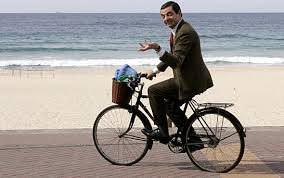 But there are definite advantages to being left-handed—we’ve evolved to be naturally adaptable and inventive, and between the time we spend trying to master right-handed appliances and forgetting to eat, lefties are seldom overweight.
Which reminds me—I’m sure I left a sandwich somewhere. And I think I’d best lie down …
4 August 2014 © 2014 The Domestic Alien
________________________________________________________________
Home is where the hat is
© 2014 The Domestic Alien
http://www.youtube.com/watch?v=7wYpVy9W29M

Neil Diamond succinctly captured the sense of not belonging – of being both estranged from the place we’ve left and on the outer of where we’ve gone to – in I am … I said:
Well I’m New York City born and raised
but nowadays
I’m lost between two shores
LA’s fine, but it ain’t home
New York’s home,
but it ain’t mine no more
(writer-Neil Diamond; copyright-Prophet Music Inc.)
I so get that. After living nearly half of my life on the opposite shore from the one I grew up on, I still feel like an itinerant, no matter where I am. It’s probably not helped by the fact my regular home’s in a city where nearly everyone’s from somewhere else – the first question you ask any new acquaintance is ‘where did you come from?’ – while my current home’s a place I came to specifically to work. And the city I grew up in has changed so much since I’ve been gone that we’re all but strangers now. It’s unsettling, and lends a niggling sense of impermanence that waxes and wanes, but never disappears.
I guess being away denies us the subtleties of ongoing change, while sporadic visits hand us heavy, jarring chunks of new things we have no connection with. But sometimes we can find a thread – a tangible link back to things we once knew – and it’s just enough.
On my last trip home – ‘home’, by Stan Barstow’s definition, being the place grown-up people say they’re going to when they’re off to visit their parents – I took an extensive reccy around some of my old haunts to see if it’d help lay some ghosts to rest.
My old suburb’s largely unchanged, save for some new roads and such. The key landmarks – schools, shops, sporting clubs – are all still there, and though the odd house has gone as developers creep in with units and townhouses, most of the quarter-acre blocks still have only one house on them. But somehow it seemed different, and so much time’s passed that I’m not sure I’d know anyone there now.
‘Help yourself!’ called a man from the driveway of a place where a  fruit-heavy mulberry tree was bowing onto the street. And when I did, it took me back as only tastes and smells can, to being shooed away from that same tree by an earlier owner who wasn’t so keen to share its succulent bounty.
Then I took the bus into town – time was, I knew the CBD intimately because I worked there and spent my lunchtimes exploring its depths. But no more. Though familiar enough to recognise, the city felt weary, as if awaiting retirement. The once-vibrant place had changed … or maybe I had. Perhaps it was a bit of both.
My old secr etarial college has been reincarnated as a swish doctor’s surgery so, posing as a none-too-certain patient, I toddled about as much as I dared while awaiting the inevitable “Are you right there?” Deciding truth was my ace, I told them why I was there and asked if I could take a look around. “No problem,” they said. “We get a lot of ladies in here saying that.” But once again I felt the intertwined sense of familiarity and strangeness, and decided it was time to go.
That night an old friend surprised me with a visit to the dance hall where we and our friends had spent so many evenings dancing and cramming as much life as possible into our exuberant youth. And wonderful as it was to revisit – if not to relive – the past, I knew then it was time to finally close the door on it. On the way home I passed the city’s glorious river, draped in the lurex of thousands of lights. And feeling like I’d just got The Look from a former lover, I fleetingly felt the warmth of how much I’d loved this place when it was mine. But that was then, and my home lies somewhere else now – with today’s cast and crew, set and plots.
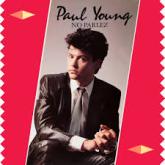 I started with a song, and will finish with one, too. Though about love, it also suits my purpose and the theme of this piece. And dammit, I’ve always loved Paul Young.
http://www.youtube.com/watch?v=ju_a2-Pve4g
17 May 2014 © 2014 The Domestic Alien
________________________________________________________________
Of mountains and molehills
© 2013 The Domestic Alien
Like an old soldier, I’m called up every year to be poked, prodded and squished … and that’s nowhere near as exciting as it sounds.
Today I made the annual trek to the clinic for my mammogram, and once again got the precious all-clear. But there’d be a couple of hundred ladies there throughout the day, and the law of averages is against us all receiving good news. So even as I skip on home knowing I’ve flown under the radar yet again, I worry for my sisters.
 My breasts and I have had an interesting, if not always warm, relationship. Slow and late to develop, they never did swell to my mother’s voluptuous proportions. Neat and compact, they sat unobtrusively while I dismissed their advantages – no sagging, no back pain, no bouncing when I ran for the bus, no need for a bra. And I could sleep comfortably in any position.
At sixteen I sensed a change in one of my breasts, and my doctor discovered a tiny cyst. Nothing to worry about, he insisted, but let’s get it out anyway. Just to be sure, he said. But my fragile sense of calm was ruffled when the first thing I heard on waking from the anaesthetic was a nurse telling me how lucky I was that they’d found nothing ominous. When another nurse started grilling me as to why my doctor had insisted on removing this cyst, when hers had told her not to worry about one her daughter had, I was further unnerved. And eternally relieved.
The surgery must have done the trick, as I had no further problems with my breasts – though they were always small, unless I was breastfeeding. I surprised Mr Alien with them the day after our son was born, and I’m not sure he’s over the shock yet. He’s a man who dislikes large breasts – the type of man I had no idea existed when I was a girl, and was wondering whether I’d be single forever. But there’s someone for everyone.
As our complement of alienettes grew, my hard-working breas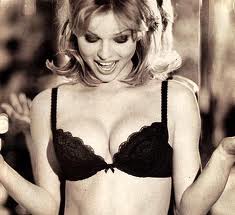 ts went close to qualifying for long-service leave. I yearned to feel like a sexy, desirable woman again, and vowed to treat myself to a top-of-the-range push-up bra once I’d weaned the last one. But sadly for me, my breasts had had enough by then, and decamped to a secret location to enjoy a well-earned retirement. I was devastated.
Whenever I bemoaned by boyish physique, Mr Alien would graciously tell me he loved me just as I am. And that – having borne five healthy children – I hardly needed breasts of any size to validate me as a woman. I appreciated his support, but pointed out that, having fathered five healthy children, he didn’t need a bass-baritone voice to validate himself as a man. But he’d feel a bit weird if he was a soprano.
I’d just come around to the idea of having implants – something I’d never been comfortable with – when first my mother, then my mother-in-law, were diagnosed with breast cancer wit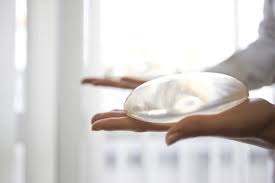 hin a six month window. Though they both survived and are now notching up 10 cancer-free years, it brought home to me how quickly things can change. I wondered how long an implant might hide a budding cancer, providing false sense of security while precious time trickled away. And I knew it was a chance I’d never take.
But even so, I sometimes wished for more upstairs. One day I said as much to a radiologist as she struggled to wrench what little I have into the machine for my mammogram – which effectively had me climbing onto the X-ray plate.
“Well, at least you’ll always look youthful,” she quipped in that no-nonsense tone they must teach at med school. “If you saw as many sixty-five-year-old breasts as I do in a day, you’d soon realise just how lucky you are. Okay … hold your breath.” And then she zapped me – only once, because smaller breasts are also denser, and evidently require less radiation.
My verdict that day was good, in more ways than one. So off I went, consummately grateful for my own good news and praying for similar for the ladies still awaiting theirs.
But even when we fly under the radar, it’s still there.
Check your breasts, ladies. Self-examine. Note changes, and if in doubt – head to your doctor, pronto. You’ve got your life in your hands … or you should have, at least once a month.
Do that and you’ll be around to enjoy more years of poking, prodding and squishing that’s every bit as exciting as it sounds.
28 June 2013 © 2013 The Domestic Alien
________________________________________________________________
Ms Givings
© 2013 The Domestic Alien
The advent of the gender-neutral term Mx as an alternative to Mr, Miss, Ms or Mrs, and the inevitable resistance it’s met takes me back to the 1970s, when Ms – the status-neutral alternative to Miss and Mrs – was first adopted.
Ms wasn’t universally popular. Many dismissed it as the latest stunt from the bra-burning man-haters who, having secured the right to vote, abolished the marriage bar and begun agitating for equal pay, were running out of things to complain about. What was the point of it, anyway?
 Like lots of things, it didn’t matter, unless it mattered to you. A Mister was mister from when he was no longer Master, which was at 21 – or 18, in 1970s Australia. But a Miss was a miss until she became a Mrs – and if she never did, she’d carry Miss to the grave … which also rendered her an old maid. Ah, that lovely term … uttered with the smug condescension unique to married women. Everyone knew a Miss Someone-or-other who was impossibly old, and lived alone. People felt sorry for them in a way they never did for widows – the Mrs Someone-or-others who lived alone – because they’d been married once. Or sometimes twice, but no-one talked about that.
I didn’t make much of it at the time, though I do remember The Sonny & Cher Comedy Hour regularly featured Mr and Ms, a series of skits about an emancipated woman and her wimpy stay-at-home husband. That it was edgy enough to run on prime-time TV speaks volumes about Ms back then.
By the time I moved into high school, The Cause – and the term – had gained momen tum. Lots of our teachers were called Ms – one in particular being a young and with-it English teacher who was the epitome of cool. She was the only person other than my father I’d ever seen reverse-angle park a car. And she did it faster than he could. Always up for The Cause, she was an inspiring soul I still remember, and think of, today.
In secretarial college we learned all about Correct Terms of Address. A man was always Mr, and a lady Miss or Mrs, depending on her marital status. If you didn’t know which applied, you used Miss, the rationale being that if she wasn’t Miss now, she had been once – and that was a safer bet than calling her Mrs if she wasn’t married. Ms didn’t even enter the equation.
As an old-school Man’s Man, my dad considered Ms so ridiculous he refused to pronounce it correctly, as to do so would be acknowledging it as a term. To this day he’ll say: “M.S. Jones …” rather than “Ms Jones …” when reading from the newspaper. It used to make my blood boil, but not any more. These days my blood’s busy boiling over a lot of the terms the Alienettes use, and there’s a limit to how much boiling I can take.
 But I’ve made exceptions – like nearly exploding on receiving a nametag at one of Mr Alien’s work functions. It read: “Mrs Alien”. That’s right … we were Mr Alien and Mrs Alien – with not so much as a first name to distinguish me from the man I apparently belong to. On seeing the steam coming out of my ears, Mr Alien proceeded to kill himself laughing. I’d have helped, but there were too many witnesses.
“Geez, whoever did that was brave,” he said, with the luxury – and consummate relief – of knowing it wasn’t him. The incident was so momentous that I kept the nametag for posterity – which is just as well, as all subsequent nametags have read Ms Alien. I’m sure calling me Mrs is a mistake they’ll never make again.
It’s not that I care whether people know whether I’m married – I just don’t see its relevance. And I’m not (Mr) Robinson Crusoe there – my friend Allie, who has never married, also wears her Ms with pride, and not a little insistence.
“After a certain age, people just assume you’re married, and routinely call you Mrs,” she says, “so I always tell them it’s Ms. They’re usually okay about it, though there was one time …”
I was intrigued.
“It was a senior guy,” she recalled, “who insisted it made no difference whether he called me Miss, Mrs or Ms, because we both knew who I was. So I started spelling his name – Michel – with an ‘le’ on the end, and when he complained, I told him it made no difference, because we both knew who he was.”
So Michel soon swapped his misgivings for MsGivings … which will stand him in good stead for the future, when he may well encounter MxGivings as well. And in 30 years’ time, someone will be writing a blog (or whatever forum writers are using then) about the furore that erupted when the term Mx was introduced, and the storm in a teacup it turned out to be.
8 May 2013 © 2013 The Domestic Alien
________________________________________________________________
An old raincoat won’t ever let you down
© 2013 The Domestic Alien
I’ve always had a passion for raincoats … but not for the reasons you might think.
My first, a scarlet park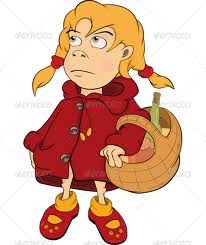 a, not only kept me dry and warm in the winter months, but always drew a comment from the twinkly-eyed butcher on my mother’s and my Friday visits.
“Hey – it’s Little Red Riding Hood!” or “Is that where my fishing jacket got to?” he’d call from behind his block amongst the sawdust. I was devastated when I could no longer stretch that parka’s static length across my rapidly-extending frame, and my mother gave it to an aunt for one of my cousins. I’m pretty sure she did that over the summer, so that by the time I noticed, the statute of limitations had expired, and she was off the hook. As was the parka.
The suburb I lived in while at primary school attracted lots of English migrants whose rosy cheeks and accents were like those from Our Tales of the Empire. And they always had a raincoat – a proper cloth one, with a plaid cotton lining and lots of buttons and tabs on the outside, and a hood that not only kept their head dry, but looked stylish, even when sodden. Whenever you asked where they’d got their raincoat, they’d say “England”, which had me thinking that was the only place they made them. So I resigned myself to a long wait.
And in the meantime, to the decidedly unchic but practical regulati on yellow raincoat with sou’wester hat that was de rigeur in those days. Heavy and thick, those babies were lined with a flannelette-type fabric that conspired with the waterproof outer to cocoon our little bodies in a layer of self-generated steam, so we’d arrive at school damp and parboiled. That was bad enough, but after the novelty of going to school had worn off, there dawned the grim reality of walking to and from each day with our raincoats on, like a raggedy procession of ducklings. Even when it wasn’t raining, but looked like it might … our mothers were the “just in case” generation.
Every year we’d try to convince them to buy us new, less garish raincoats, but it was a losing battle, because for some reason those damned raincoats took longer to grow out of than anything else we ever owned. The best you could hope for was that someone might steal yours, but that never happened.
 So on I went, still coveting a proper raincoat until I happened upon a cavernous Ladies Coats department in an old-school emporium in the CBD soon after I started working. Here I found the Holy Grail of English raincoats – and with perfect timing, as that year’s winter was one of the coldest I can remember. Staying warm and dry while walking down a wet, windy street gave me an unprecedented sense of invincibility, and a secret smile that probably had people wondering.
Some years later I accompanied the football-mad boyfriend of the day to a game under a leaden sky that split soon after we took our open-air seats, and poured rain on us for the full two hours of play. With no brolly, even my Rolls Royce of raincoats eventually succumbed to the unrelenting deluge, and I ended up literally soaked to the skin. My raincoat ruined, I felt bereft, and never quite forgave the boyfriend for reneging on his promise that we’d leave the game early if the rain didn’t stop.
The trauma of my English raincoat’s demise was so great that I couldn’t bring myself to buy another – it seemed akin to dishonouring a loyal friend who’d valiantly protected me till the cold and bitter end.
So instead I opted for a stylish leather number that keeps out the wind and cold, looks great with long boots, and doesn’t need to be waterproof because these days I’m in and out of cars, or have a brolly. And anyone who insists on watching sport in the pouring rain does so without me.
Old boyfriends may let you down, but an old raincoat never will.
7 February 2013 © 2013 The Domestic Alien
________________________________________________________________
Daddies’ ditties
© 2013 The Domestic Alien
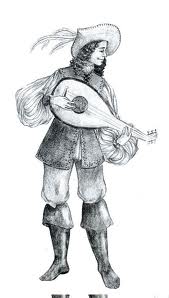 My father was never short of a song, and as his musical tastes ran from old sea shanties to Russian folk to opera and country and western – and most of what’s in between, he had quite a repertoire. And if he didn’t know the words … well, he’d make some up.
He was renowned for his improvised lyrics, which were usually hilarious and quite irreverent. No purist, my dad. Anything was fair game.
A favourite was a rambling poem about the legend of Excalibur I assume he’d learned at school, which grew more ridiculous with every verse … but so gradually it sort of snuck up on you. And just to keep you on your toes, he’d change the words each time.
He loved to unleash his unorthodox lyrics on the unsuspecting, his impossibly straight face and delivery leaving them wondering whether they’d really heard what they thought they’d heard. And once in on the joke, they’d often become instant (and usually, lifelong) fans of his unconventional works. I frequently told him he’d missed his cue in life – he was a natural bard.
But along with his improvised compositions was a cache of real songs I’d never heard anywhere else, like:
The captain’s boot
A rollicking tale of the madcap antics of the crew on a sinking ship – not least the captain, who “sat in the captain’s chair, and played his ukulele as the ship went down.” His name may or may not have been Nero.
The MTA
Told of a man who boarded a pay-as-you-leave train service without money, so could never get off. Evidently his wife threw him a sandwich through the window each day as he passed his home station – why she declined to put his outstanding train fare in the bag was never explained. Married ladies probably know why.
Stone cold dead in de market
A calypso-style song about a woman who despatched her husband in the marketplace with a pot and a frying pan because “he had it comin’.” Married ladies will get this one too.
The preacher and the bear
Detailed the prayers of a preacher who’d gone hunting on a Sunday morning, and was run up a tree by a bear. Saying in part: “… oh Lord, oh Lord, if you can’t help me – for goodness sake don’t you help that bear”, it was a Karma story.
 How’re you gonna keep ‘em down on the farm (after they’ve seen Paris)?
A farmer’s word of warning to his wife about keeping their sons at home after they’d been “jazzin’ around, and paintin’ the town”. I understand that said wife subsequently decided to check out Paris herself before allowing her boys to go there, and that they’re still waiting to hear from her.
Don’t put your daughter on the stage, Mrs Worthington
The implorings of a punter who, singularly unimpressed with one Miss Worthington’s theatrical “talents”, sought to save others from similar suffering. These days he’d be an Australian Idol adjudicator.
She’s too fat for me and Don’t bring Lulu
This pigeon-pair of politically-incorrect ditties would never get a guernsey these days … even a “gorgeous”-sized one.

And there was another song, set to the melody of Clair de lune, that I never knew the name of. The somewhat risqué lyrics took the form of a request from railway personnel for passengers to use the rest rooms only while the train was moving. I assumed my dad heard this one from my grandfather, a career engine driver.
One day I heard my boss whistling the song, and bounded into his office, asking: “Jim … did I just hear you whistling Passengers will please refrain?”
“Yes … you did,” he chuckled, with a grin that spread across his face until it all but connected his ears. He’s someone’s daddy too.
I still don’t know who was happier that day – my boss, me, or my dad, when I told him about it later. But I do know there’s something about daddies’ ditties that you’ll never find anywhere else.
18 January 2013 © 2013 The Domestic Alien
________________________________________________________________
B4 FIFO
© 2012 The Domestic Alien

Just when did “fly-in-fly-out” become a stand-alone term?
My dad worked on remote West Australian mines years ago, and no-one called it “fly-in-fly-out” then. After all, how else were you going to get there?
In those days it was called “going up north” – “north” being an indeterminate region of the state that held an equally indeterminate wealth of natural resources just ripe for extraction. And men like my dad (no women – equal opportunity hadn’t been invented then) went up there to extract them.
Like a grown-up boarding school, their quarters housed men from different countries and backgrounds, all hell-bent on making The Big Quid up north for reasons as different as they were. I’ve since wondered if for some it was akin to joining the Foreign Legion, the long hours and hard work providing welcome distraction from an aching heart, or perhaps escape from a ladyfriend whose grip had become uncomfortably tight. But to my dad it was just a means to an end – a way to make good headway with the mortgage while he was still young and strong.
He worked long stretches – six weeks at a time – and long hours, and he used the hard work and good food to his advantage and got into tip-top shape. I was so proud when my fit and handsome dad picked me up from school on his short spells at home.
 Mostly, I remember the red dust that permeated everything at the minesite and its surrounds. Fine and indelible, it was ingrained into my dad’s hands, and left ghostly fingerprints on the letters he wrote to us. And when he came home, my mum would wash his clothes two or three times before the rinsing water would run clear – the first couple of washes drawing a gritty red silt from the fibres. “Are you gradually smuggling the Red North back home with you?” she’d joke.
He’d entertain us for hours with tales of his adventures and the characters from Up North and, a born storyteller, he could always find the humour and pathos in any situation. He told of workmates with exotic names like Pierre and Stuart* that matched their accents, which my dad could copy perfectly.
There were men like my dad who’d set limits on their time Up North, while others found the isolation and strictures suited them, and had no plans to finish up, ever. Though they must have, as the work was hard and the days long – no life for an old man, even a healthy one.
And while my dad was gone, my mother batted on alone, keeping the home fires burning – literally. Well, in winter. Like a pioneering woman she managed everything – the monotonous and the monstrous – herself. The only time I remember her getting help was when the grease trap (the prehistoric drainage system connected to our kitchen sink) blocked, and my uncle stepped into the breach (again, literally). For all his generous, up-to-the-elbows-in-it assistance, the blockage remained, and in desperation my mother sought further wisdom from the local hardware man, who produced a little-known gadget designed specifically for the problem causing her grief.
Armed with the magic utensil, my mother made short work of the once-insurmountable problem, and was justifiably proud of herself. “Ten dollars that [tool] cost me,” she’d say when relating the story afterwards, “and I’d have paid a hundred if he’d asked. It was more than worth it.” That equates to about $60 and $600 AUD respectively in today’s money, which should give some idea of just how grateful she was. Suffice to say the hardware man could do no wrong in my mother’s eyes from that day forward.
After a couple of years my dad said goodbye to the dormitories, red dust and international coterie that had enlivened his stretches Up North, packing his gear and bringing his workboots home one final time.
He still worked two jobs, but at least he was home to share his stories and laughter with us every day. From that time on, “flying in and out” meant grabbing a hot meal at home between his first job and his second.
That’s my kind of fly-in-fly-out.
* In 1970s Australia, Pierre was an exotic name – and you weren’t called Stuart (or Duncan or Ian) unless your parents were Scots
8 December 2012 © 2012 The Domestic Alien
________________________________________________________________
Blues and sepia
© 2012 The Domestic Alien
At the risk of sounding like an old bluesman, I woke up one morning with a song 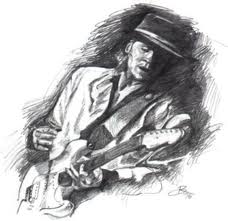 called Henry Was playing in my head. It was a rousing ditty about a hapless but lovable rogue, and was as familiar to me as any song I learned by rote in primary school.
But the words and tune soon slipped from my mind, becoming blurrier and blurrier till all I could remember was the title. So whatever Henry was – apart from a hapless but lovable rogue – is a mystery to me now. Which is a shame, as while the experience was brief, I do recall a fondness for the song.
I’ve heard of this sort of thing happening – evidently Paul McCartney woke one morning with the complete tune to Yesterday in his head, as did Ross Wilson with Eagle Rock – but their extraordinary talents ensured they not only recalled the whole piece, but did wonderful things with it. Me, I just want to know who Henry was.
It’s not the first time this has happened – once I dreamed I was giving a speech in a strange but beautiful language that was native to my dream-self, but became less and less familiar as I woke. While I desperately tried to memorise what I was saying, the otherworldy sounds dissolved, taking their meaning with them, till all I was left with was a tantalising half-memory. It was like trying to catch smoke.
I’ve long nursed a deep inte rest in dreams, perhaps because I’ve always dreamed so vividly. I was about 15 before I realised most people don’t dream in colour, and that fewer still can smell, taste and feel in dreams (which is great when dreaming you’re in love – not so good if you’re being shot). And as if to sate my curiosity and sense of deprivation, my psyche did deliver a couple of sepia-toned dreams a few years ago … and now I know what I was missing, I don’t. Not a bit.
I’m convinced my brain often works harder asleep than awake … though that’s not always a bad thing. I’ve solved problems through dreams – like that elusive angle for my current story magically appearing in my mind on waking, or something I’ve been struggling to recall suddenly returning with a vengeance. I even went to bed one night decrying my lack of ability to write science fantasy, only to dream a story in the genre that I turned into a short film script, and won a prize for.
But the most profound dreams I’ve experienced  involve a waiting room – an ethereal place where there are amazing things to learn, and amazing people to meet. As it’s a recurring dream, Mr Alien has implored me to ask one of the Waiting Roomers for the Lotto numbers next time I’m there. I’ve told him it doesn’t work like that, but he remains hopeful.
With my interest in dreams and their meaning piqued by the Henry Was episode, I bought myself a dream dictionary – something the Alienettes have been mercilessly teasing me about ever since. But for all its wealth of content, there’s nothing in there about Henry, or who he was.
So of late I’ve been turning in at 7.30 every night, in the hope I’ll soon find out. Just think – if Henry Was is indeed an original song, I could have a serious mainstream blues hit on my hands.
Yeah … I know. In my dreams!
9 November 2012 © 2012 The Domestic Alien
-
thedomesticalien says:
As an addendum to this – last night I dreamed I was writing the verse to Henry Was, and was pleased with the result. But – damn and blast – it also slipped away when I woke up. He’s a prize tease, this Henry.
________________________________________________________________
Shedding the mystique
© 2012 The Domestic Alien
Long before their social and therapeutic value was acknowledged and a government-sponsored program introduced to prevent their disappearance from the urban landscape, every man had a shed. It was his sanctuary. A special, sacred place.
“Just what do you do down there?” my mother would ask whenever my dad emerged from his. Well, he made things, and fixed things, and pottered about. It was like a giant cubby (Wendy house, for anyone from the UK) that housed a lot of clutter and random bits and pieces whose disarray provided a perfect cover for whatever he was really up to.
Once I found two exquisitely painted cut-outs in there – a boy and a girl in traditional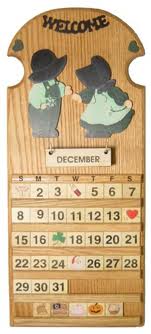 European costume – and wondered. I wondered again when I found him painstakingly spray-painting cubes of sanded wood one day when I went to call him for lunch. And again when he disappeared down there with a few sheets of Letraset peeping out of a paper bag. But he was an Aquarian – brilliant, but eccentric – and over time, you get used to them doing that sort of thing.
When he presented my mother with a perpetual calendar he’d lovingly handcrafted over those couple of months, it all made perfect sense. His shed wasn’t just a workshop – it was more like a studio.
 And a haven. He’d be down there like a shot whenever an attractive neighbour (whose husband often worked away) would come to visit my mother, but spent most of the time asking about my dad. He eventually got so good at identifying her footsteps that he’d be in the shed before she’d even knocked on the front door. My mother said she found it hilarious, and joked he must be brewing his own down there. But just quietly, I think she was pleased he was so keen to keep away from the predatorial neighbour.
But my dad was simply maintaining a long-held tradition – his own father, my beloved grandfather, had been Commander of the Taj Mahal of Sheds. He’d built it himself in The Depression from salvaged materials, and the interior was permanently bathed in a magical, ethereal light. For what seemed hours I’d wander around it, surveying my grandfather’s otherworldly realm with the wonderment only children can know.
A keen woodworker, he had carving and woodturning tools, a heavy vice I nearly dropped on my foot more than once, raw timber of all textures, colours, and lengths, and bottles of linseed oil that gave off a thick, sweet scent that hung in the air. And all around was an assortment of useful odds and ends – sheets of glass, mirror and picture frames, boxes, and so many different bicycle parts I wondered whether it’d be possible to make a complete bike from them all.
Once my dad told me there was a small hole in one of the walls, that my grandfather had insisted his neighbour would put his ear to, to listen to what was going on in the shed. Evidently my dad had scoffed at the suggestion, only to have my grandfather tell him he knew it was true, as he’d looked through the hole himself and seen the neighbour’s ear on the other side of it. In later years I met a painter who recreated this comical scene in watercolour for me, and my dad smiled with instant recognition when I gave it to him.
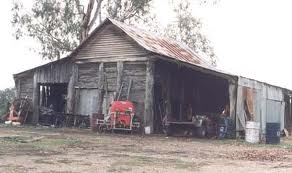
“It’s a wonder your grandfather ever let you in there,” said my mother one day when I fondly recalled roaming about in the shed. “He never let anyone in there. You must have been special.”
But I thought she was just being melodramatic – I was certainly never hunted out of there, and I don’t remember anyone ever coming to look for me. And they must have known where I was … or at least my grandfather did.
A couple of years ago the extended family held a get-together, and those who couldn’t attend were invited to write down their favourite memories, to be read out at the event. No prizes for guessing the subject of my piece.
“It’s a wonder Pop ever let you in there,” my cousin, who’d read it out on the night, said to me later. “He never let anyone in there unless he was there to supervise. You must have been special.”
And there was no trace of melodrama this time – my cousin’s just not given to such things. So perhaps it was true …
Ah … men and their sheds. Special, sacred places.
26 October 2012 © 2012 The Domestic Alien

Thoroughly enjoyed this story!!!it not only fitted my situation perfectly(my Husbands banging in the Shed as we speak) it also bought back lots of childhood memories of my own….I could smell my Fathers Shed also……..
 Yvonne says:
Love this story!! I could almost smell the shed……… Xxxy
thedomesticalien says:Glad you liked it, Yvonne … the shed is almost a holy place to most of the men I’ve known!
________________________________________________________________
Shouldering a secret
© 2012 The Domestic Alien
For years I hid a guilty secret. I was certain no-one shared it, and equally certain it meant I was several kinds of weird.
After all, no-one talked about it. No-one ever said: “I love men’s shoulders.” Buns and biceps? Absolutely. Legs? For sure. But not shoulders … they were a no-no. So I indulged my passion for strong, square shoulders in secret and silence with movies, MTV, magazines, and – discreetly, of course – when out and about.
Though unsure what had spawned my Atlas complex (in later years I’ve concluded it’s a primal thing born of my propensity to chest infections), I was sure my unorthodox perversion was unique to me, and should remain a secret. But hiding something doesn’t make it go away … and that’s where the fun started.
Once in a particularly long and slow-moving Friday bank queue, I found myself standing behind the most glorious set of shoulders I’d ever seen, beautifully accentuated by a neatly-fitting T-shirt. Initially I couldn’t believe my luck – a dress-circle view, with little danger of being moved on any time soon. But then the sweating started. The more agitated I got, the more I sweated, which increased the agitation, and it became a frenetic vicious circle. I couldn’t stand still, began hyperventilating, and wondered how long it’d be before Security was alerted. I remember thinking “What am I going to do? I cannot continue standing here next to those shoulders,” seriously fearing I’d spontaneously combust. But thankfully I didn’t.
Then the shame set in, and I berated myself for being no better than men who ogle women’s breasts. And I committed to never again plumbing such depths of pathos.
Which I did pretty well until one time when, hulking a trolley down a supermarket aisle, I saw a vision approaching in a red polo shirt – by this time I’d refined my radar to the point where I could even detect glorious shoulders from the front. A furtive glance once he’d passed confirmed my suspicions and, God help me, I turned that trolley round (which I can assure you was no easy task) and, pretending to have forgotten something at the other end of the aisle, I followed that shoulder-filled polo shirt, intoxicated by the wonderful, muscular view.
Right on cue the shame tried to set in once again, but this time I was on such a natural high it gave up in disgust, and skulked off to ruin someone else’s day.
“Shoulderama!” I texted to a girlfriend I’d confessed my secret to in a weak moment, realising as I did so that I’d crossed a bridge. When she texted back with a happy face, I knew I’d crossed another one. I was officially out. And boy, did it feel good.
Not long after The Polo Shirt Incident I happened upon Allan and Barbara Pease’s 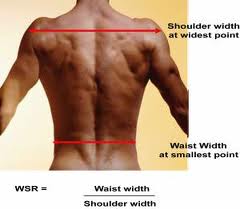 Definitive Book of Body Language (www.peaseinternational.com © 2004) while researching an article, and could have kissed them both. Buried in the Courtship Displays and Attraction Signals chapter was a section on Broad Shoulders, Chest and Muscular Arms, and why women find these attractive. Shoulders! Specifically listed – although in fairness, the preference group is officially branded “Chest/Arms”.
Evidently “Men evolved these features to allow them to lug heavy weapons over long distances and carry home their kills. The male chest developed to house large lungs enabling more effective distribution of oxygen and allowing him to breathe more efficiently when running and chasing.” (page 314).
So it seems I’m not as weird as I’d thought … well, I probably am, but not for that reason. The relief was phenomenal – I felt like I had a brand new soul, and could look forward to the rest of my life as an out and proud Shoulder Girl.
 And any niggling doubts I’d nursed about that were deftly dispelled one lunchtime when, stopped at a red light, I paid the hunky, shirtless windscreen washer to clean the back window of the car in front of me.
I may have still had a dusty windscreen, but I also had a very pleasant afternoon.
12 October 2012 © 2012 The Domestic Alien
One Response to Latest story
thedomesticalien says:Received this lovely comment from Allan and Barbara Pease in response to the story:
Allan and Barbara Pease
14 hours ago
That’s a terrific story Caitlin. Much of women’s attraction to male body parts are due to the reasons we wrote about in Body Language and shoulder obsession is not unusual. You probably had an experience as a young girl which highlighted the power of male broad shoulders and so it seems unusual to you as an adult because you can’t pinpoint the exact event or source. But there are many women who also feel this attraction as you do so don’t lose any sleep over it. LOL
________________________________________________________________
Livin’ la vida rocker
© 2012 The Domestic Alien
Being a rock star is a vocation, not an occupation – so there’s no rea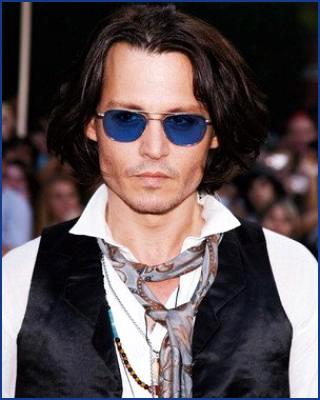 son why you can’t look and live like one, even if you pay your bills by doing something else. And if you’re a true rock star – you’ll already know that.
But if you’re new to the game, or have recently turned 40 and have finally found the courage to dispense with propriety and be true to yourself, here are some of the accoutrements you’ll need …
Attitude – the one essential ingredient. Enough of this and you’ll get by with a minimum of the following:
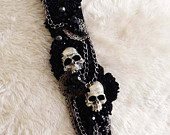
“Chain of Skulls” by MisSMasH
View full range at http://www.etsy.com/shop/MisSMasH2012?ref=si_shop
or check out the MisSMasH Facebook page
Accessories – try to think outside the box with these – the more unusual, the better. Can be minimalist or layered up, depending on your particular brand of cool.
Belts – wide, narrow, woven, layered, studded. Particularly favoured by rock chicks, even when they’re not needed to keep anything up or in.
Black – not something you wear, but something you become. You’ll either know this already, will learn it, or you’ll end up giving it all away to become a gardener. But not the George Harrison kind.
Boots – all kinds (rock stars never wear shoes). Black, of course, but you can let your head go with textures, styles, heels, buckles, zips and spurs. Okay – maybe not the spurs.
Colour – used solely to highlight your black. Red’s best, followed by silver and white.
Cool – is as cool does, and the ϋber-cool can get away with almost anything. They don’t need this guide.
Drainies (drainpipe trousers, for very young or very old readers) – skinny and black. If a rock star owns only one pair of trews, it’ll be these.
Dress – figure-hugging dresses are essential to the rock chick’s wardrobe. Always short and often in pastel shades, they look granny-worthy on non-rock chicks (see also Attitude).
Eyeliner – no self-respecting rock star would leave the house without this adorning their eyes, and with the tube on hand for touch-ups.
Fabrics – leather, mohair, suede, velveteen and anything of striking design or texture. Tartan is a biggie.
Hair – wild. Born rock stars have naturally wild hair; others have to work hard on their “don’t care-hair”. Length is unimportant, as the coolest rock stars can carry anything (see also Attitude).
Ha ts – of all kinds. Old-fashioned ones are best, as rock stars don’t follow trends – they set them. Baseball caps (particularly worn sideways or backwards) are a no-no, unless you’re Rick Nielsen.
Jacket – (see also Leather) any style, provided it’s striking and fitted. Rock stars never hide their light under a bushel, and they’re not about to do so under a jacket either.
Kilt – Quite the thing for rock stars of both genders. No-one teases male rockers about kilt-wearing.
Lean – though often misattributed to bourbon, according to a well-known blueso I asked, rock star lean is in fact down to “eating when you can, and not worrying when you can’t”.
Leather – a rock star staple. A leather jacket is your constant companion, but you’ll also favour leather pants and vests and, if you’re a rock chick – skirts, dresses, shorts and even corsets fashioned from leather.
Less is more – too much of anything will out you as a wannabee.
Lipstick – red, of course.
Quirky – goes without saying. But I couldn’t think of anything else beginning with ‘q’.
Red – yes, again. It’s so crucial it’s worth mentioning twice. Or even three times (see also Lipstick).
Scarves – Real rock stars – men and women alike – wear scarves. All year round. Get used to it.
Smoky eyes – a must for rock chicks. You’ll know how to do them.
Style – It’s innate. If you have it, you’re a born rock star, and will be able to create a jaw-dropping ensemble from the cast-offs your maiden aunt left out for the rag man.
Sunglasses – style unimportant, but must be worn at all times, even indoors and at night. Any stumbling or bumping into things will be attributed to too much partying.
The Church’s Steve Kilbey giving The Look
The Look –the coiled spring expression. Seldom intended (or interpreted) as a welcome.
Vinnie’s – the rock star’s favourite boutique. You’ll find more treasures here than in any high-end store … and you’ll never run into anyone wearing the same outfit.
Z-Attitude – because nothing of rock star value starts with ‘z’. And because attitude can’t be emphasised enough.
So there you have it, rockers and rock chicks. Rock it out and enjoy – we only live once.
And any time a paparazzo fixes you in the crosshairs of their lens, just give ‘em The Look. They won’t know whether you’re really famous or not, and the uncertainty will drive them crazy.
That’s so rock’n’roll.
28 September 2012 © 2012 The Domestic Alien
 Annalisse Morrow says:
I still wear black, have a multitude of boots, red lipstick not as often as I used too, however red nails have been a main stay for me. Unfortunately, now, the studded leather belts don’t fit any more but I don’t have the heart to take them to an op shop, I just can’t bare to let them go. These days I don’t need sunglasses as my reading glasses will change in bright light or sunlight to protect my eyes…so I look cool all the time. The hair is a bit of a problem though…when you’re young, tussled hair looks sexy, when you’re old, tussled hair…just makes you look like a bag lady. 
thedomesticalien says:Think you’re a tad hard on yourself, Annalisse … rock star chic is ageless. And it sounds like you’re rockin’ out as coolly as you ever did (is “coolly” even a word?) Go girl!
________________________________________________________________
The monster within
© 2012 The Domestic Alien
I never envisaged feeling sorry for The Hulk.
While h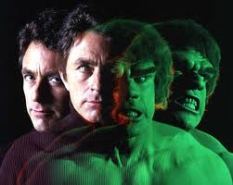 is violent television transformation into the green and menacing Lou Ferrigno scared the bejesus out of me, I gave no thought to how the mild-mannered Bill Bixby might have felt, knowing this monster lurked within. Until now.
Steroids have copped a very bad rap due to abuse and misuse. But their powerful curative properties mean that, like medicinal opiates, they’re also prescribed by respected medicos for legitimately-acquired ailments – in my case, a chronic chest infection that nearly took me out … but that’s another story.
My physician assured me steroids were the best treatment for me, given how ill I’d been. And that I shouldn’t worry.
“The main side-effects are agitation and insomnia,” he said. “Oh, and they’ll make you eat. You won’t like that!” There was a disarming twinkle in his eye as he said that.
But as it happened, agitation, insomnia and appetite were the least of my problems … it was the seriously short fuse, which he hadn’t predicted, that made life interesting. And not just for me.
I’d always been a quiet and co-operative sort, unless pushed to my limit – which didn’t happen often, and never more than once by the same person. When asked how I remained so calm when everyone around me was bellowing or looking for the nearest meat cleaver, I joked that I’d lost my temper many years ago, and had never found it again. But steroids changed all that.
First in the firing line was the air-conditioning technician who, following a steroid-fuelled email to Maintenance Services, was charged with easing the Arctic temperature in my office. He was unfortunate (or foolhardy) enough to suggest a “better” option than the one I’d asked for. And compounded things by calling it that.
“Why do you think that’ll be better than what I’ve asked for?” I queried, and he immediately got the rabbit-in-the-headlights look.
“Because [with what you’ve asked for] you’ll be hot,” he faltered, adding a thin smile that cut no ice with me. But by then he knew that. The fear was travelling up his eyeballs like water up a porthole.
Soon after I’d let him know precisely what I thought of his better suggestion, and how it’d be best for both of us if he did what I’d asked – and fast – the job was done. And that particular air-conditioning technician never ventured into my office unaccompanied again.
Though I felt kind of bad, I was pleased with the instant result – something two years of polite requests had failed to achieve.
“Geez,  I’m glad it wasn’t me in your office that day,” laughed a detective friend, who deals with hardened criminals on a daily basis. “They call that ‘’roid rage’, because the steroids make you agressive and unpredicable. But it should wear off as your dose reduces. He is reducing your dose, isn’t he?”
Yes, he was. But I already sensed I’d changed irrevocably.
“There’s no ongoing effect once you’re off them,” laughed the physician. “Maybe they’ve just shown you a more effective way to operate!”
“Maybe you’re just becoming a grumpy old woman,” ventured Mr Alien. “You’re in the right age bracket!” I’d have kicked him, but he moved.
“Mr Alien’s right,” said my friend Allie, who’s long been renowned for her gentleness. “We do get grumpier as we get older. I’m a proper witch some days.”
My jaw hit the ground.
“No … it’s true!” she insisted. “I had a crack at someone at work recently, and they forgot to delete the earlier email from their response to me. It said: ‘Best do it quick smart, before Allie gets pi**ed off again’.”
“Oooh. But hey – I wouldn’t worry about it,” I reassured her.
“Worry about it?” she said. “I couldn’t be happier … they’re all scared of me! My life’s never been so good.”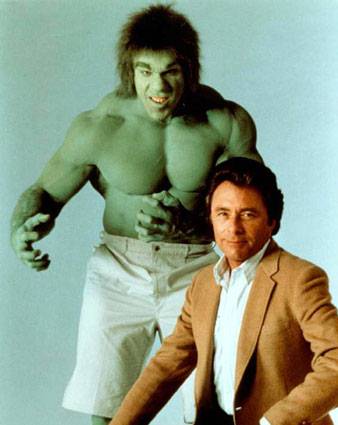
And thanks to what I’ve learned from steroids, neither has mine. Not only have I overcome my fear of anything loud and green, but at long last I know the reason behind Bill Bixby’s enigmatic smile.
And air-conditioning technicians with better suggestions than mine keep well away from me.

21 September 2012 © 2012 The Domestic Alien
________________________________________________________________
The meat in The Sandwich Generation
© 2012 The Domestic Alien
“No offence, Mum … but it’s like having a child in tow, the way you keep wandering off,” #2 son chided as we took in the delights of the university open day. “Can you try to stay in view? I don’t want to lose you in the crowd.”
I swear he’d have me in baby reins if he wasn’t fundamentally opposed to them. But that’s another story.
This little sortie provided the most recent evidence (since I broke a bone playing sport, which I only ever did when forced) that The Man Upstairs not only has a sense of humour, but has a lot of fun with it.
As a youngster I bemoaned the fact I’d been born at the wrong time – too late to have experienced the 1960s, and too early to have benefited from parents who had. And I committed to becoming, when the time came, a thoroughly modern parent – a groovy one, even. Or whatever they say now instead of groovy.
 I’d espouse progressive views, embrace modern trends, present myself youthfully, and keep up with things. Not for me the outdated mores, silver tresses and old-before-my-time attire. How could I possibly go wrong?
Here’s how.
“Why don’t you just let your hair go grey, Mum?” asked #2 son as I emerged from the hairdresser’s after a marathon session aimed at disguising the “natural sparkle” in my hair.
“No way, Buster,” I told him, catching a look on his face I’m sure I saw on my mother’s years ago, when I started streaking my hair in an effort to recapture my girlish shade of blonde.
“I can’t wait till I’ve got grey hair,” he said, really warming to the subject. “It looks dignified.” At nineteen, how does he even know what dignified is, let alone aspiring to look it? He should be thinking his is the first generation to roam the modern world, and eschewing anything that isn’t young or new.
But no. Feeling hampered by his youthful face and the fact his birthday’s very late in the year, he’s currently thinking of having non-prescription glasses made, to make him look older. And is constantly nagging me to wear the lenses I’ve finally conceded to in the interests of seeing anything beyond the car bonnet.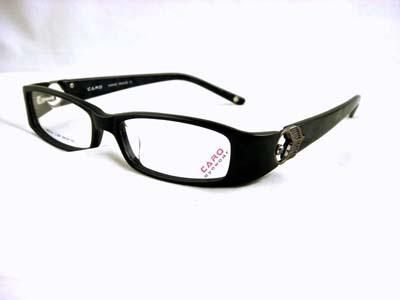
“For God’s sake, Mum … everyone has them at your age,” is his rationale. “I can’t see the problem. And without your glasses, neither can you.”
Okay, so he won that round. But it doesn’t end there. In an unnerving echo of my youth, my kids have begun raising wary eyebrows at my fashion choices, questioning whether my skirts are too short, my necklines too low, my jeans too tight – you know the drill. Essentially, I’ve done the impossible – given birth to my own parents.
 “I thought I’d left home!” I cried in exasperation one day, falling in a heap to contemplate my fate as the permanent buffer between two equally conservative and – if sociologists are to be believed, demanding – familial forces. That’s why they call us The Sandwich Generation. I read it in a book.
Then came the revelation – so perfect, yet so simple I couldn’t believe it hadn’t occurred to me before. As the wild card between a suit of straight kids and one of equally straight parents, I’m in the unique and enviable position of being able to embarrass – nay, mortify – both with equal magnitude. And on a really good day, I can do so with the same act or article of clothing.
Hallelujah! Along with that tremendous sense of humour, The Man Upstairs obviously has a deep and well-balanced sense of social justice. That’s something even I can see without my glasses.
13 September 2012 © 2012 The Domestic Alien
________________________________________________________________
Boots’n‘all
© 2012 The Domestic Alien
You either get boots or you don’t. The general populace will wear them when they’re fashionable, or if they live in Melbourne or Canberra, or for going to outdoor music festivals.
But bootaholics wear them all the time – all weathers, all occasions, all styles. Stacked heels, Cuban heels, stilettos, leather, suede, laced, studded, zipped – we love ‘em all. But why?
“They look sexy, they feel sexy, and we feel sexy when we’re wearing them,” explained a veteran troubadour I posed the question to. “And they’ll get you laid every time!” he added, the smile and twinkle in the eye leaving no doubt he knew what he was talking about.
He’s probably right. It’s true that those who ooze charisma – like the Johnny Depps and Bruce Springsteens of the world – are never seen in brogues. They wear boots, man. And if it comes to that, so do charismatic women like Deborah Harry and Kate Moss.
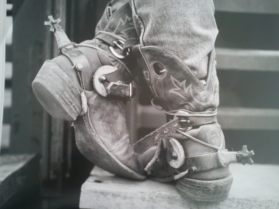
From when we’re little, wherever there’s excitement or mystique, there’s boots – think Father Christmas, Captain Starlight, pirates, cowboys and gypsies. We all love to dress up and lose ourselves in the adventures those exotic characters might have, but for some of us, that passion never fades.
A few years ago I met with a former OzRocker who’d long traded his stage garb for business wear and become an award-winning music and sound design director. He epitomised the with-it young executive – the suit saying “corporate leader” and the open-necked shirt saying “creative whizz”. But the pointy-toed black boots he’d teamed them with screamed “I’m still a rock god!” And Lord, did I smile when I saw those.
My own passion for boots was born soon after I was. My dad, a motor mechanic of the overalls and blackened hands type, would don his leather work boots each day as I looked on, entranced by the most fascinating operation in my new and rapidly-expanding world. On they’d go, then he’d tighten the braided laces and criss-cross them through the upper hooks at lightning speed. For some reason that last part really got me, and I longed to do it for him, or at least to help.
“No … that’s the technical bit,” he’d say. “I’ll have to do that part myself,” gently pointing out that my tiny fingers weren’t yet strong enough for the job. I understood, but was terminally disappointed. And no sooner would those boots be off of an evening than I’d be into them – their well-worn tops skimming my pudgy thighs as I hulked them down the hallway one at a time, each step taking all my strength and concentration. For all their vibrant colours, my mother’s stylish pumps just didn’t cut it next to these.
With The Boot Experience fresh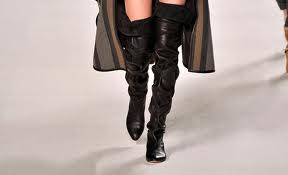 in my mind, Nancy Sinatra’s These Boots are Made for Walkin’ and Lee Hazlewood’s lament to his long-gone silver spurs in Summer Wine became my favourite songs. I found both tracks hypnotic, though I wasn’t sure why … sort of like grown-up jokes I didn’t quite understand, but knew I’d get one day.
And now I understand that that’s just me – I’m a bootaholic, plain and simple, and happily so, dammit! Name the occasion, and I’ll have a boot that fits the bill perfectly. Or I can source one within the hour (Harbourtown’s just down the road, and open till 6.00 pm).
So with that comfortably in mind, and an evening date to keep, I must leave you all and adjourn to my shoe closet.
It’s time to re-boot.
6 September 2012 © 2012 The Domestic Alien
________________________________________________________________
My alma mater
© 2012 The Domestic Alien
It was a working man’s school in a working man’s area, but despite the dubious honour of being the bus driving fraternity’s most-hated high school, our alumni include an original Neighbours cast member, the personal physiotherapist to the Fremantle Dockers, the bride of a tyre baron’s son, and a scientific expert called in to investigate a statue of the Virgin Mary that appeared to be weeping rose-scented oil.
The bus driving thing wasn’t entirely unwarranted. There were the inevitable pranks that crop up when teenagers and transport are combined, but nothing too serious until the day they were silly enough to put a rookie driver on the longest feeder run without checking he knew the route. He didn’t, and – as any driver would – asked one of the kids, who, as any kid would, told the driver the wrong way. The rest is history – both in the annals of the school and the Metropolitan Transport Trust. And likely as not, in the wayward kid’s behind, as well.
It was a modern school that seemed enormous, though welcoming and well-equipped, especially for a state school. But its true wealth was in the personalities that inhabited its rooms – real characters who breathed life not only into our education, but into our adolescence, which is surely when we need it most.
We had a Media Studies teacher who frequently defied official policy by discussing religion and politics, in the firm belief that informed debate among adolescents was crucial to the development of well-rounded adult minds. And he taught us about the importance of The Big Picture – of not accepting what we’re told until we’ve sought out and assessed all that we haven’t been told.
The Science Department was rife with all manner of exotic species – from the earnest biologist whose concentration during experiments once prevented him noticing his tie had caught alight, to the teacher who used the term ‘itself’ so frequently one student opened a book on how many times he could say it during a 40-minute lesson. And if you’re wondering – I don’t know, because I lost my money on that one.
We had an English teacher who, though tiny, could roar like a General when angered, but would answer the next timidly-uttered “Miss?” with a smile and her customary warmth. She taught us the importance of venting our emotions only to those who’ve incited them. But the story that stuck with me most from that department came from another teacher who related the tale of Robert Browning and Elizabeth Barrett – how he’d fallen in love with her through her poetry before ever meeting and falling in love with her for real. I had no idea that story was still archived in my brain until I read Sting’s autobiography Broken Music, and instinctively knew how Browning must have felt.
And the coolest of them all was the Year Master, who already knew allowing teenagers the right balance of freedom and responsibility is the best way to keep them in line. A heavy smoker, he’d turn a blind eye to students ducking out for a puff at school socials, reasoning that being unable to kick the habit himself, he was in no position to criticise. But as a teetotaler, his tolerance for alcohol consumption was zero and, as far as I know, no student ever tested his resolve in that regard.
In the months leading up to the Year 12 formal he finally managed to give up tobacco, and delighted in his new-found license to prohibit smoking at the big event. But by then his consistency and justness had earned him such respect from the students that they considered it a fair cop, and happily complied.
Then we moved on – as students do – to universities, trade schools, careers, marriages and families of our own. We went like bats out of hell for a few years, then fell into settled existences while practising what we’d learned from books and classes.
But the real learning – about life and the world and humanity – came not from what our teachers taught us, but from how they taught us, and from who they were. Even now, I often wish I could let them know the difference they made to my life, and to tell them the job they’re doing is one of the most important in the world.
But I have a feeling they already know that.
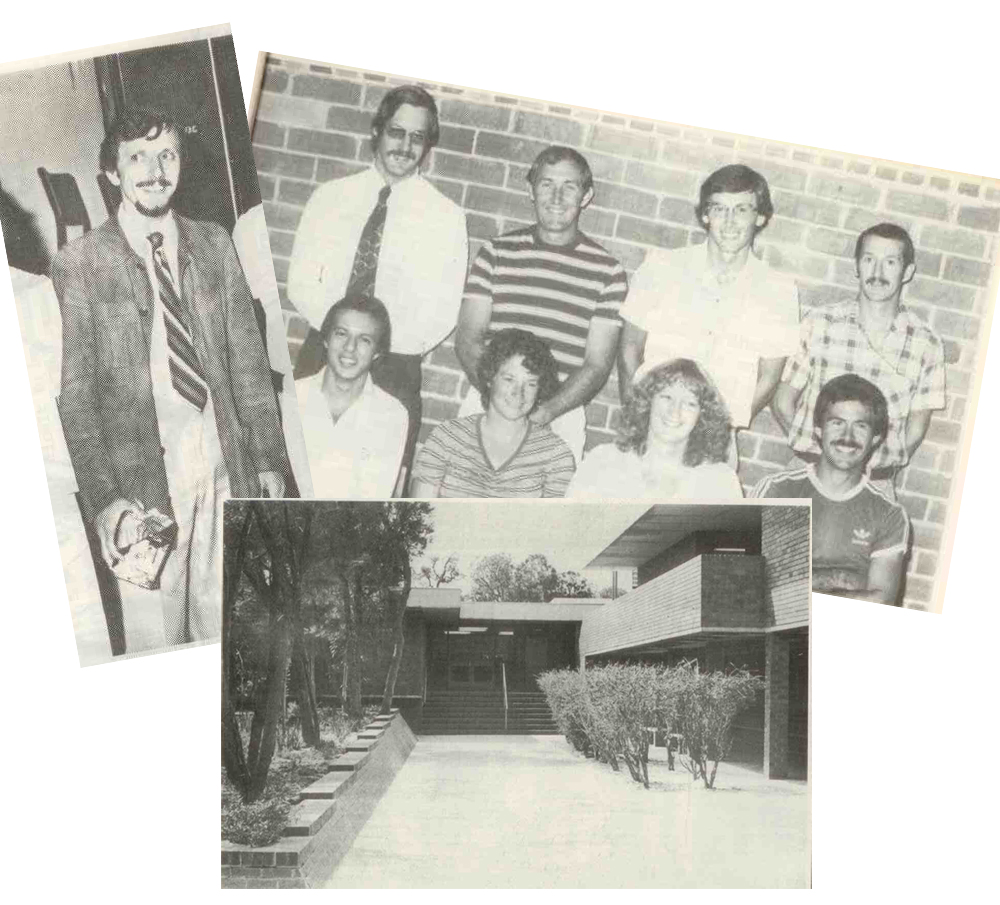
31 August 2012 © 2012 The Domestic Alien
4 Responses to My alma mater
-
Gareth says:
ahhh Mr E White – quite possibly the best teacher and friend that any student could want and actually have. It was an honour and a privilege for us mere students
-
He was one in a million, that’s for sure. Would say he was remembered fondly by all who knew him, but it sounds like a eulogy – and I have it on excellent authority he’s alive and well.
-
Kerrie says:
The tie episode goes to Mr Hemsley – he taught year 8 science. Came from Yallingup and I reckon he fancied Miss Moran the exchange social studies teacher from the USA
-
Got it in one, Kerrie. I wasn’t there for the tie episode, but was treated to a hilarious re-enactment from someone who was
-
________________________________________________________________
Surviving your high school reunion
There’s no middle ground with high school reunions – we either attend with relish or plenty of attitude, or we conscientiously object.
The trigger for a minefield of memories, reunions offer the chance to show our former classmates how well we’ve done, to lay ghosts to rest, to say or do something we’ve always wanted to, or perhaps to remember why we didn’t in the first place.
Reunions re-acquaint us with those who remember the essence of what we are. Who remember how we were before we grew our layers of propriety, learning and restraint. And who remember we were once pert and smooth, had curves in the right places, and enough oil in our skin to generate pimples. Reunions re-acquaint us with those who remind us of ourselves when we were young, and you can’t put a price on that.
The funny thing about catching up with people from our school days is that while we eagerly assert that we’ve changed a lot since then, we unconsciously assume that others haven’t, which can make recognition difficult. But thankfully, people generally remain true to type.
The Old Flame is always a worry. Your approach to this one will depend on the terms under which you parted but, as a general rule, you should try not to look too pleased if they tell you they’re divorced or widowed.
The School Bully is another to watch out for. They’re usually still up to their old tricks, only in a suit and tie now. Or they’ve become a really nice person you just can’t warm to because of that time they knocked off your ELO t-shirt and sold it back to you.
Miss Hot Pants will have married well, and will still look a million dollars, probably because that’s what she costs her husband every year. He’s usually a used car sales baron or property development executive.
The School Mouse will have turned into a terminal socialite or bad drunk, or maybe both. This type also has a tendency to become drop-dead gorgeous after they’ve left school, leaving you wondering how you could have been so blind back then.
The School Brain will have used their intellect wisely to successfully pursue the career of their dreams. You’ll realise – with your new-found maturity – that they weren’t a nerd at all, but a go-getter who knew exactly what they wanted and how to find it.
And if you’re lucky enough to have any of your ex-teachers attend your reunion, you’ll be amazed by how young they are – one of the cruel realities of high school education is that your perception of age and seniority are skewed during those five years. But this is a moot point, as by now you will have noticed that policemen, brain surgeons and High Court judges are also looking far too young to be competent.
So go forth – reunite and enjoy! Nostalgia may not be what it used to be, but if it comes to that, neither are you. Seize the day – it may just turn out to be one of the best days of your life.
DOs and DON’Ts
DON’T drink too much
A high school reunion’s the last place you want to be saying or doing things you might regret later. Let’s face it – these people have more than enough blackmail material on you already.
DON’T pretend you’re something you’re not
Enhance and embroider by all means, but don’t fabricate your past or present. You’d be surprised just who knows who, and you’ll only look foolish if your audience knows you’re bunging it on. Besides, it’s difficult to lie convincingly when you’re usually honest.
DON’T go there with preconceptions
You’ve probably changed immeasurably since your school days – and most of your former classmates will have, too. You may find that these days you really click with the nerdy guy from Maths III who drove you mad by constantly correcting the teacher.
DON’T be shy
To state the obvious, reunions bring together a lot of people who wouldn’t otherwise be seeing each other. This is your big chance – don’t waste it. Socialise!
DO look your best
You don’t have to spend a fortune to look great, and whether you’re formally or casually dressed, you’ll feel much more confident if you’re well presented.
DO attend with someone you feel comfortable with
Partners can sometimes feel like a spare leg at reunions, unless they attended the school themselves, or they’re well acquainted with some of the people who’ll be there. It’s good to go along with your closest friend/s from your school days, so you’re not worried about your partner becoming bored, and you won’t feel obligated to leave earlier than you’d like to.
DO make sure you’re relaxed
Allow yourself plenty of time to get there, and for the event itself, so you’re not stressing or constantly watching the clock.
DO have a blast!
Reunions are usually held at a time of life when we’re much more comfortable with ourselves than we were when we knew the people we’re reuniting with. So catch up, have a laugh and reminisce. It can be very refreshing to spend time with people we knew – and who knew us – in simpler times.
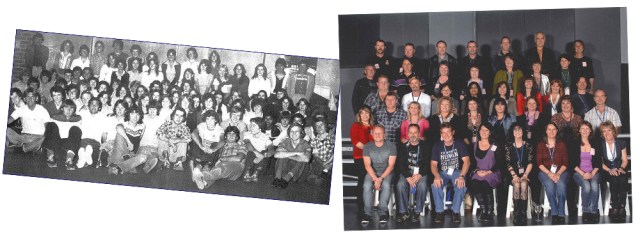
24 August 2012 © 2012 The Domestic Alien
________________________________________________________________
—————–
That tie’rd old debate
Ties. There are those who do, those who don’t, those who think they’re uncomfortable or unnecessary, and those who find them professional-looking, or even sexy.
I’ve always found them appealing, though as I’ve never had to wear one, my personal experience of ties had always been limited to buying them for the men in my life.
 But the perennial Gold Coast Tie Debate recently inspired me to research the issue further – collecting and analysing relevant data, and even grilling unfortunate colleagues on their tie-wearing preferences. None of which turned up anything new. So in the interests of accurate research, I bit the bullet and donned one myself.
The expected jibes never came, and lots of my colleagues commented on how professional I looked, which was disappointing given I always dress smartly for the office. But the most surprising thing was that I felt more professional in a tie, and performed accordingly.
The Australian Concise Oxford English Dictionary defines a tie as ‘a thing that unites or restricts persons; a bond or obligation’. And I’ve concluded that this is at the heart of the psychology of tie-wearing.
Tie-wearing is said to have been pioneered by Croatian soldiers, the name ‘Croat’ evolving into ‘cravate’, the generic French name for tie, and the English name for a specific variety. With the colour of their ties denoting the soldiers’ factions, tie-wearing came to symbolise fraternity, solidarity, acceptance and belonging. And, of course, authority and a sense of competence – whether or not that’s actually the case – hence its popularity among conservative professions where trust is valued.
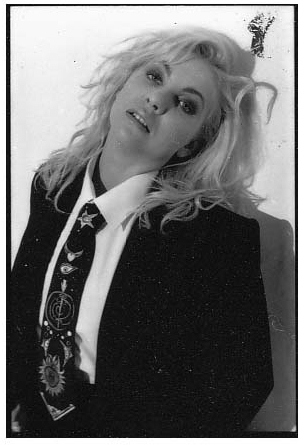
Photo of Annalisse Morrow by Tony Notaberadino
Make-up by Annabel Barton
– check out Maybe Dolls page on Facebook for photos, posts and links
When worn neatly, a tie offers some promise we’ll be on our best behaviour, and perhaps – as I found – may promote that very behaviour. Be honest now – would you really be comfortable entrusting your hard-earned cash to accountants dressed for Bondi Beach? And remember how Those Nice Young Boys the Beatles won over dubious seniors with their neat attire, even as they led The Youth Revolution of the 1960s?
On the other hand, when worn untidily, the tie can symbolise dissent or mutiny from within the ranks, creating an uncomfortable threat. Perhaps it suggests we’re out of control, or about to discard all that’s proper and safe. Let’s face it – few parents would like little Johnny going to school with Angus Young, and as for Chrissie Amphlett …. well, we won’t go there. When the wild-tied Knack burst into the post-punk music scene, fathers everywhere learned a new unease. They knew Johnny Rotten would never come calling for their daughters, but Dougie from The Knack – well, he just might.
And who could forget Brideshead Revisited’s Sebastian – the quintessential British aristocrat who defied convention and the restrictions of The Establishment by wearing his tie outside of his jumper? These renegade tie-wearers were to be taken very seriously. After all, a cat among the pigeons is more of a menace than one on the outside, looking in.
A tie is more than a piece of cloth or an avenue for individuality – although that particular aspect does seem important to tie-wearers. The ties we choose – and the way we choose to wear them – speak volumes about who we are, how we are, and maybe even why we are. Clothes may not maketh the man – or the woman – but they definitely contributeth.
And as for me? I’m a convert – of the there’s-none-so-fanatical-as variety. Not only has my long-suffering husband lost more wardrobe space to my new collection of shirts and ties – he now has to book his own ties a week ahead. You gotta love research.
17 August 2012 © 2012 The Domestic Alien
________________________________________________________
—————–
A Tom for every purpose
When the tsunami of little boys named Brooklyn hits its inevitable peak, the less image-conscious of us will give thanks for two things. One – that the Beckhams weren’t staying in Yonkers or Queens when their firstborn was conceived. And Two – that while fashions come and go, tradition prevails when choosing names for our bundles of joy.
Among the na mes that reflect their times are the constants – the perennials of expensive schools and boardrooms that are never in or out of style but, like the law of gravity, are always there. One of these being Thomas – from the Greek Dyatimus, meaning ‘twin’ – which is seemingly as old as time itself.
A recent survey placed Thomas 10th on the list of the 30 most popular boys’ names of the last century, and in many of those years it’s graced the top ten. Not to mention numerous remarkable men.
Thomas the Rhymer was a Celtic deity who, legend has it, slipped between this world and the otherworld to draw on divine inspiration for his poetry. It’s held that the power of the glam dicin, an undermining song used for satire, was so great that bards like Thomas were more feared in their day than even the greatest warriors.

We may call someone ‘a doubting Thomas’, giving no thought to the cliché’s origins. Thomas the Doubter’s questioning of his faith was said to have given rise to the strongest conviction of all of Christ’s disciples, and he became renowned as being particularly devout.
The author Thomas Hardy, too, was known as a man of great thought and vision – his stories frequently exploring the complexities of marital dissatisfaction at a time when divorce was not an option, but lethal domestic poisonings hit an all-time high.
Then there was Thomas Edison, the celebrated inventor so dedicated to investigation that he reportedly disappeared from his own wedding reception, and was found in his laboratory. Evidently, he’d thought of something.
The less common “Tommy” evokes a boyishness epitomised by the blue-eyed hero of The Who’s rock opera, the ever-youthful Tommy Steele and every English soldier, too many of whom were cut down in their prime.
As for the concise and sexy “Tom” – well, what can I say? Synonymous with virility, he’s been maligned for Peeping, lent his name to prolifically passionate male cats and the smouldering literary hero Tom Jones, a name adopted in turn by a smouldering musical hero. Welsh singer Thomas Woodward Jones – better known as Tom, single handedly kept the blood-pressure pill and ladies’ lingerie industries afloat during and after the GFC, his lusty performances of tracks like Kiss and Sex Bomb giving whole new meaning to the term tom yum.
And the use of the monosyllabilic form by music icons Petty and Waits leaves no doubt that its bearer isn’t and doesn’t, respectively.
So to all the Thomases, Tommys and Toms throughout history – may I salute you. And if someone you know has bestowed this wonderful name on their bundle of joy, keep a close eye on him. You may soon bear witness to something quite amazing.
Even more amazing than Yonkers Beckham.
10 August 2012 © 2012 The Domestic Alien
________________________________________________________________
_________________
—————————-
Letter to my 15-year old self
Dear Caitlin
I have good news and bad news, and I know you’ll want the bad news first – that’s something that’ll never leave you.
But first I’ll tell you that yes, you’ll have lots of children – five in fact, and all healthy – because I know that if I don’t, you’ll skip through this, taking in nothing, until you find your answer. That’s another thing that’ll never leave you. You’ll joke that you didn’t so much have children as supply yourself with the siblings you never had, and that’s closer to the truth than you realise.
You’ll never quite get over losing Pop, and the pain will re-visit you in all its rawness whenever you’re at your lowest. But your very survival will show you can – and will – survive anything else life throws at you. And the day will come when you remember Pop with only the warmth of having known and loved him as you did.
The innate restlessness you call “the tap on the shoulder” will never leave you either, but you’ll learn to use its constant prodding to launch into spheres you wouldn’t have ventured to otherwise. Eventually you’ll see that Restlessness is in fact a powerful ally whose face bears a remarkable resemblance to your own.
You’re maturing now, and your aunt was right – young men will come around, and you’ll need to be careful. Listen to her, and heed her advice – not because she’s older than you, but because she’s an uncommonly attractive woman who wasn’t always fifty.
And study hard. You know those kids at school who call you “the brain”, and you think they’re stupid for thinking so? Well actually, they’re closer to the mark than you are. Just being someone’s wife and someone’s mother might seem enough for you now, but while you’ll love those roles, that hungry mind of yours will crave much more than domesticity.
You’ll marry twice (the clairvoyant was right), the second union being as long and fulfilling as the first was not, and providing a lifelong partnership through which you’ll grow exponentially.
Everything happens for a reason, and each of us is the sum of our experiences and choices. Even when those choices aren’t so wise, the experience can be invaluable if we learn from it.
So go forth – live, laugh and love. We only get one shot.
With love from Grown-up Caitlin x
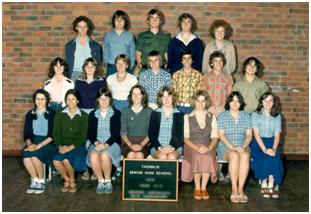
3 August 2012 © 2012 The Domestic Alien
 The Domestic Alien
What a data of un-ambiguity and preserveness of precious know-howconcerning unpredicted feelings.
Thanks Carl – glad you’ve enjoyed reading my musings, and hope you’ll visit again soon. 🙂
Pingback: A welcome from The Domestic Alien | The Domestic Alien
What’s up, yup this article is genuinely good and I have learned lot of things from it about
blogging. thanks.